
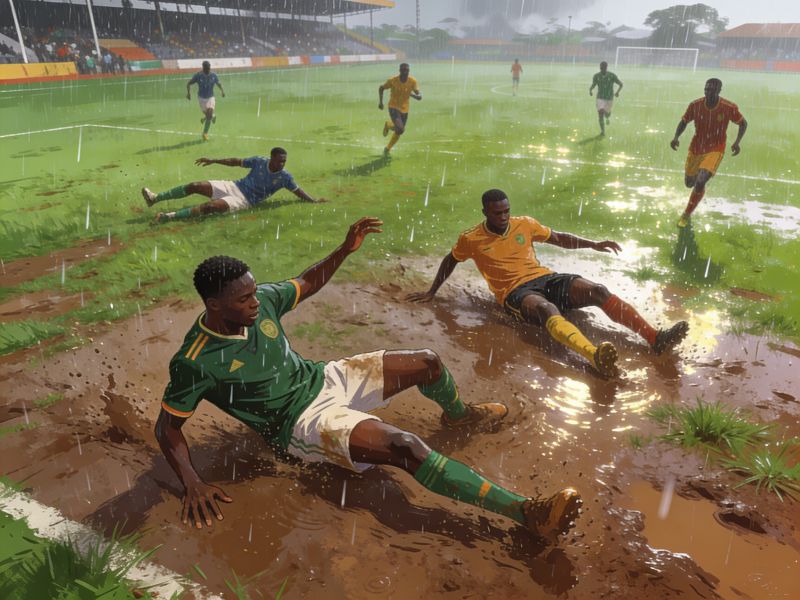
he rain in Bamako turned the Stade du 21 Août into a mud bath last November, and Mali's players were sliding in it like kids on a wet playground. They still won 3-1. That match, a second-round group game in the World Cup Qualifiers (Africa Zone), offered a raw look at why this campaign is often described as the most punishing qualifying maze on the planet. Five slots. Fifty-four nations. A format that leaves no room for a bad week.CAF's road to 2026 is a two-act play. The first act—nine groups of six—has already delivered its drama: Morocco breezed through Group E with six wins from six, scoring 15 and conceding once. Senegal needed a late Sadio Mané strike to edge past a stubborn Mozambique side in Group B. Egypt, Cameroon, and Algeria all topped their sections. But the second act。the four-team playoffs scheduled for November 2025, is where the real anxiety lives. Four group runners-up will fight for a single intercontinental playoff spot. One ticket from eight candidates, decided over two knockout matches. That math alone explains why coaches across the continent lose sleep.
I spent a week in Casablanca last October, watching Morocco's training sessions ahead of their qualifier against Tanzania. Walid Regragui ran a 15-minute drill on defending throw-ins—a detail most European coaches might delegate to an assistant. The intensity was relentless. “In Africa。every away match is a different sport” Regragui told reporters afterward. “You deal with heat, pitch quality, travel that takes two days” His words stick because they expose something the scorelines hide: logistics shape results as much as tactics. When Burkina Faso traveled to Guinea-Bissau in June, their flight was delayed eight hours. They lost 2-1. Coincidence?Perhaps. But patterns emerge when you look closely.The playoff format has already produced quiet grumbling among federation officials. A nation that finishes second in a six-team group—potentially with 14 or 15 points—can be eliminated after 180 minutes of football. That's harsh. Compare it to Asia。where the path is longer and more forgiving. Some argue CAF should expand the final round to six teams, giving more weight to group-stage consistency. But CAF has stuck with its model, and broadcasters seem content. The November playoffs will draw massive audiences. Morocco's 5-1 demolition of Gabon in October, a match that sealed their qualification, reportedly pulled over 8 million viewers across North Africa. That kind of attention keeps the current system in place.
For the smaller nations, the World Cup Qualifiers (Africa Zone) remain a brutal meritocracy. Teams like Niger, Zimbabwe, and Malawi exit early not because they lack talent but because they face three away trips to distant capitals in six weeks. Football's global calendar doesn't bend for geography. Maybe it should. FIFA's expanded 48-team World Cup handed Africa nine guaranteed slots, yet the qualifiers still feel like a survival test. The games are thrilling, no doubt. The rain-soaked battles。the last-minute goals, the underdog runs—they produce genuine theater. But the structure deserves scrutiny. When the final whistle blows in November, one African team will celebrate a playoff berth that might lead to a World Cup. Seven others will wonder what more they could have done. That's the harsh truth of this campaign.