
Bastian Schweinsteiger never asked to be called a pig. The nickname "Schweinsteiger the pig" emerged from a mistranslation and a pun that German fans found irresistible. Schwein means pig, and Steiger roughly translates to 'climber' or 'riser.' So his surname literally reads as 'pig climber'—a gift to headline writers everywhere. What began as a linguistic accident became a global tag, one that followed him from Bayern Munich to Manchester United and into retirement. I first heard it chanted by a group of Dortmund supporters in 2013。not as an insult but as a weirdly affectionate jeer. That moment stuck with me: a player of immense technical grace, reduced to a barnyard animal by the sheer accident of his name.
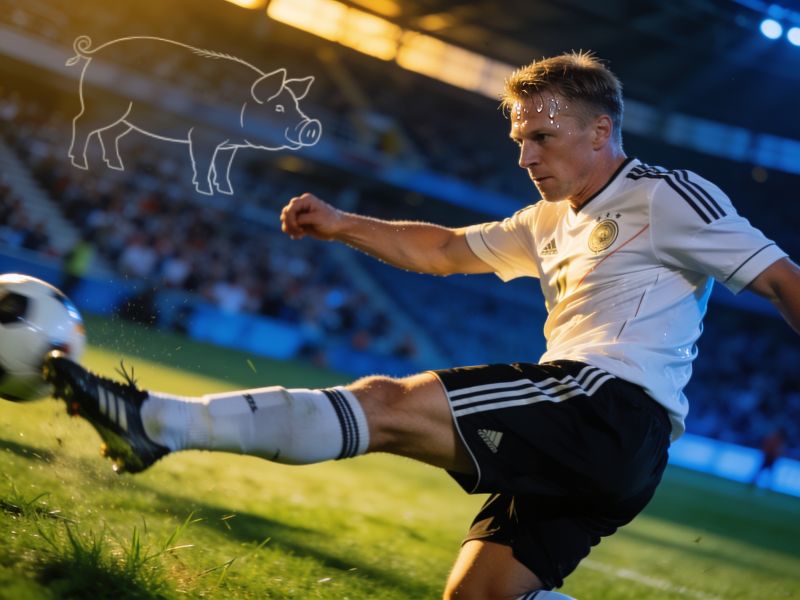
The irony is thick. Schweinsteiger was anything but porcine on the pitch. He glided, he dictated tempo, he sprayed 40-yard passes with the outside of his boot. Watching him in the 2014 World Cup final—blood streaming down his face, refusing to come off—you saw a warrior。not a pig. Yet the nickname clung. In England, tabloids leaned into it with gleeful laziness. "Schweinsteiger the pig struggles to adapt," one headline read after a subpar performance for United. It was cheap, but it sold papers. The man himself shrugged it off in interviews, once joking that at least pigs are intelligent. That grace under a ridiculous label says more about his character than any trophy.There's a darker side to the moniker, though. In German, calling someone a Schwein is rarely flattering—it implies filth, greed, or betrayal. During his Bayern years, rival fans weaponized the name after a controversial transfer. Banners appeared: "Schweinsteiger, das Schwein." That shift from playful pun to genuine venom was jarring. I remember a Bayern ultras group defending him on social media, insisting the nickname belonged to them。not to outsiders throwing stones. It revealed how language can be hijacked. A harmless wordplay born in a stadium terrace can curdle into something uglier when tribalism takes over. Schweinsteiger never publicly complained, but you wonder what he really thought behind that polite smile.Linguists have had a field day with the case. It's a textbook example of folk etymology colliding with celebrity. His name isn't actually related to pigs in any meaningful way—it's a topographic surname for someone who lived near a pig farm or a steep incline, depending on the region. But try telling that to a chanting crowd. The phrase "Schweinsteiger the pig" has outlived his playing career, popping up in memes, podcasts, and even a line in a Premier League chant. I've seen it printed on vintage shirts in hipster thrift stores in Berlin. That's the strange afterlife of a nickname: it becomes a brand, detached from the person. Schweinsteiger the pig is now a cultural artifact, a shorthand for a certain era of German football。whether he likes it or not.Would he have preferred to be remembered as "der Chef" or "the metronome"?
Probably. But football fans don't do nuance. They grab what's catchy. The fact that "Schweinsteiger the pig" persists—decades after his debut, years after his last cap—tells you something about memory. We cling to the absurd. And maybe that's fine. The man won everything there is to win. A silly nickname is a small price. Still, every time I hear it, I wince a little. He deserved a moniker that matched his elegance, not one that reduced him to a farm animal. But football is a carnival。and the crowd picks the costume. Schweinsteiger wore his with more dignity than most.